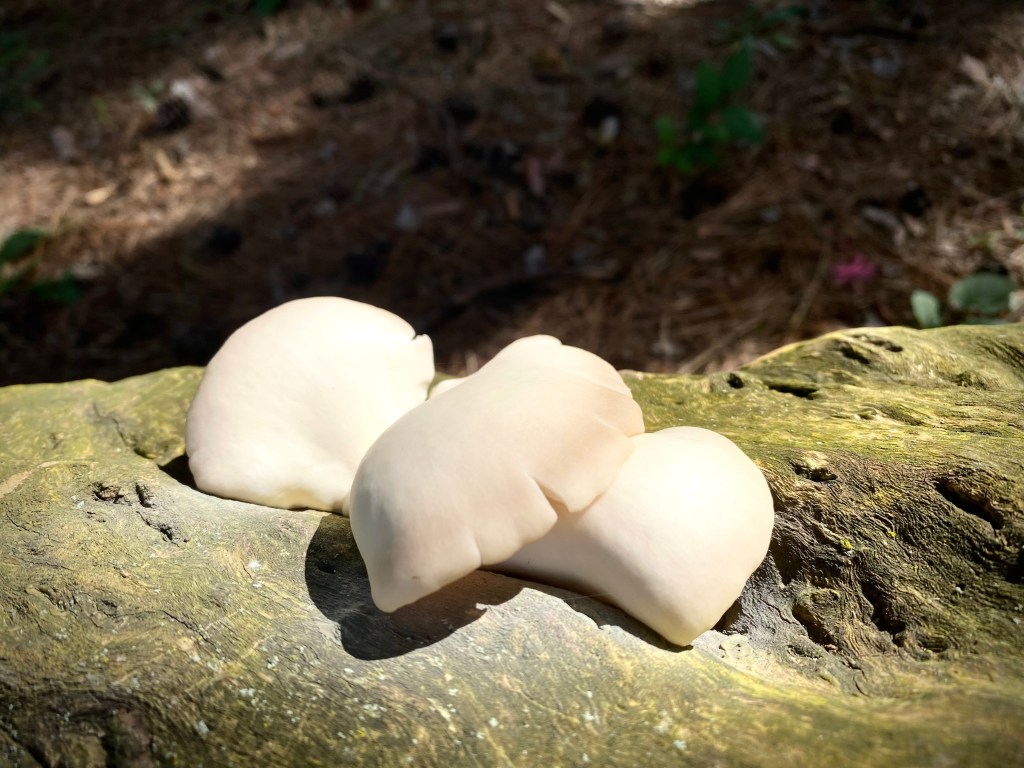
(photo: White Cheese Polyspore, Tom Delaney, Sherburne County, Minnesota, 20205)
Cooler temperatures, foggy mornings and lots of moisture in the earth and air has resulted in lots of mushroom and fungus fruiting in the mixed stands of red pine and oak that we have here. In just one walk through the woods, you will see mushrooms and fungi of different sizes, colors and shapes along your way. The photo is one example — a white cheese polypore, so named because of its color and soft shape and texture. I suppose they do look like a little like gently toasted white cheese. You can definitely enjoy their soft geometry and cozy hue. I hesitate a little to share my photos of fungi and mushrooms because people sometimes feel an aversion to them. But honestly, if you appreciate different colors, shapes, textures – let’s just say “art” – there is a lot to see! There is a wise analogy in that.
An important part of being a truly forgiving person – a person of forgiveness – is always hoping that others can can access the experience of forgiveness and the peace that it brings. Throughout a day in our busy lives, we usually meet and interact with many people, each with their own personal situations, struggles, histories, and sameness to us in terms of just trying to make life work with what we’re given. Any ordinary person will need to forgive others, and will need forgiveness, in their lifetime. All day long, every day, we meet those ordinary people. Being a forgiving person means practicing hope that each person will receive the forgiveness that they need, and give the forgiveness that they need to give, so that they may have inner peace. How can we put that hope to work in our lives?
St. Francis of Assisi placed great importance on wishing other people peace. He felt that wishing people peace was something that people conveyed not just from themselves, but from God. In the Testament of Saint Francis, St. Francis is quoted as saying: “The Lord revealed to me this salutation, that we should say ‘The Lord give thee peace.'” Throughout history different cultures have seen the value of wishing peace to people, and many people are familiar with the Hebrew word shalom (שָׁלוֹם) for “peace”, and the Muslim greeting “as-salamu alaykum” (لسَّلَامُ عَلَيْكُمْ) meaning “peace be upon you” — both of these still practices today. I might be like most people in American society today, in that my day usually doesn’t include verbal exchanges of wishes for peace with other people. We say “Hi!” and ask the customary “How are you?” but for some reason we don’t show up wishing each other peace right away. I think that if you try to start a conversation with “Peace!” people will think you are being very unusual, because … after all … you are being very unusual. For a forgiving person, that means living in a cultural context where we don’t keep an intention for peace out in the open, or the hope that people will experience forgiveness in the ways that they need to in order to have peace for themselves. I am note sure that we are all better off these days for not wishing each other peace when see and meet each other.
Maybe we need to start sincerely greeting each other with a spoken wish for the other person to have peace. Not a casual “Peace!” said just as a formality, but a true and sincere wish for the other person to have peace.
How would that change our day? All day long we would be keeping peace front and center in all our connections with other people, by greeting them with “Peace to you!” All day long, people who meet us would be reminded of peace, and experience someone who clearly expressed a hope that they would have peace. For a forgiving person, this means all day long wishing people the peace that forgiveness brings whether forgiving others or being forgiven by others. The change in a person’s experience of their day could be transformative.
During the Catholic mass, we are asked to exchange with each other the Sign of Peace, in personal response to the words of Jesus, “Peace I leave you, my peace I give you” (John 14:27). We shake hands and speak some version of “Peace!” to each other. If you are going to mass on a weekly basis, that means you are getting at least weekly practice at wishing other people peace. That’s good news because it means you’re not starting from scratch on wishing people peace. We’re lucky to have that! The Sign of Peace can be the place we start from, and then each week we add a little more thoughtfulness, a little more intention, a little more consideration, a little more sincerity, a little more perspective on how forgiveness figures into peace. Imagine someday wishing someone the best peace in the best way ever! Then imagine doing that not just weekly on Sundays at mass, but starting to do it other times as well, maybe during the week, maybe with family, friends, and then who knows? The possibilities get awesome quickly!
You may think, “I’m just one person, and I can’t make much of a difference, and people would be uncomfortable or ridicule me for wishing them peace.” Where is that voice coming from? Those words of failure before you even give it a small try? Remember that you were created in the very image of God (imago dei, Genesis 1:26), and take yourself seriously. You were born for this. Even in the smallest way, you can make a lot of things change. The smallest stone still makes ripples when dropped into the biggest waters. That’s you.
This text is an original work of its author Tom Delaney and was entirely composed without the use of artificial intelligence (AI).
If your parish or faith community is seeking a deeper experience of forgiveness, healing, mercy, and spiritual renewal, Live and Forgive is here to help. To begin the conversation, email Live and Forgive presenter and facilitator Tom Delaney at tom@liveandforgive.com — he will be glad to connect with you for a conversation. Please type in your email and click “Subscribe” below to get Live and Forgive articles delivered to you.
 Live and Forgive