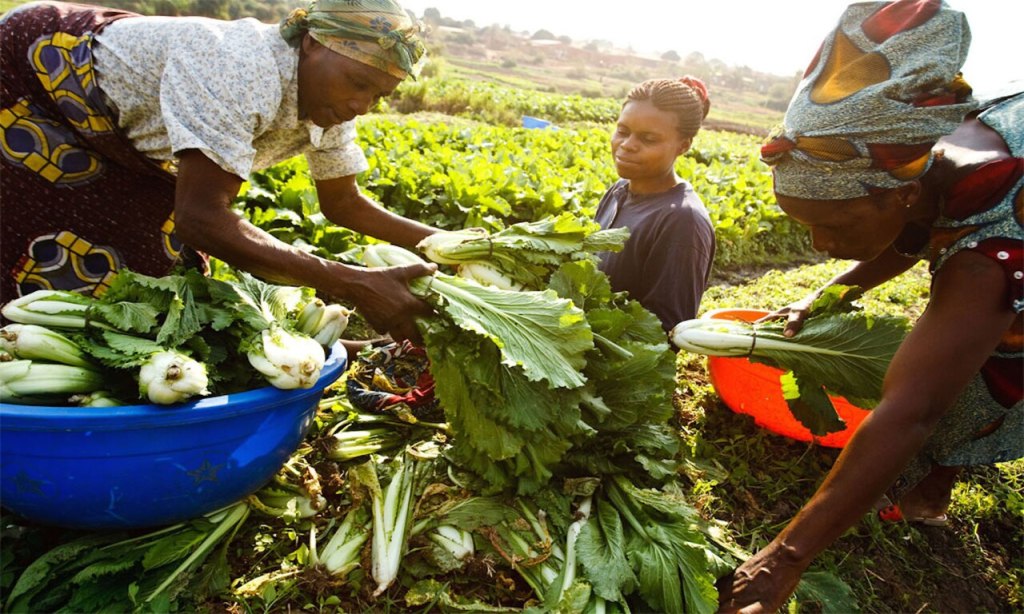
This article summarizes a recent interview in OSV News of Dr. Melissa Moschella, a professor of the practice in philosophy at the University of Notre Dame’s McGrath Institute for Church Life, on the topic of natural law and human flourishing. Natural law and human flourishing are explained, as well as the connection between them (photo: Kobai Ken, 2017).
The Whole of Law, the Law of Wholeness
OSV News recently featured an interview with Dr. Melissa Moschella, a professor of the practice in philosophy at the University of Notre Dame’s McGrath Institute for Church Life, on the topic of natural law and human flourishing. Understanding what natural law is, as well as what human flourishing is, can help us intentionally improve our wellbeing, including our spiritual life in relationship to God. In this article, I will summarize the main points made by Dr. Melissa Moschella.
What is natural law theory?
- Natural law theory is —
- A tradition of thought dating back to the ancient Greeks and perhaps most famously articulated by St. Thomas Aquinas.
- A set of ethical principles and moral norms (“laws”) that guide our choices and actions, marking out the path toward individual and social flourishing.
What is “natural” about natural law?
- Natural law is “natural” in several ways —
- It can be known on the basis of natural reason, even without the aid of supernatural revelation.
- In principle knowable by anyone, but this knowledge is not always easy to attain; proper education is required. In that sense, it’s like physics, biology or any body of knowledge.
- Its principles direct us toward the fulfillment or perfection of our nature as rational, moral agents who, through our free choices, sculpt our characters (and the character of our communities) in ways that either promote or detract from our flourishing
“Does anyone deny that friendship and harmonious social relationships are inherently valuable, worthy of preserving and promoting; that authenticity is better than hypocrisy, courage better than cowardice, and justice better than injustice? Who disagrees with the claim that we ought to treat other people with respect and fairness, trying (at least) not to harm them and (when feasible) to help them?”
What is human flourishing?
Although Dr. Melissa Moschella did not explicitly define human flourishing during her interview, we can figure out what she would probably say based on a 2025 article she wrote for the Church Life Journal (published by the McGrath Institute for Church Life) entitled “Human Flourishing, Morality, and God”.
Human flourishing is —
- Actions that contribute to integral human fulfillment in all of the dimensions of being
- Actions aimed at all-around fulfillment of human beings within a perfectly harmonious community
- Choosing and acting only in ways that are compatible with a will toward integral human fulfillment
- Choices and actions as participation in and contribution to the ideal community to which the term “integral human fulfillment” refers
- As part of integral human fulfillment, realized through God’s action and with our cooperation
“Acting morally, following moral norms, protects and promotes our flourishing by contributing to and making possible our membership in the perfect human community where our human flourishing (which is inherently social) would be complete.”
What is the vocation principle?
The vocation principle is the personal (and community) need to establish a reasonable order of priorities in life in line with a harmonious set of vocational commitments
What is human flourishing in terms of being social?
In terms of being social, human flourishing is about —
- Healthy communities at all levels — families, intermediate associations, religious communities, and political communities
- Respect and promotion of the all-around flourishing of all human beings
- Promoting the common goods of the communities to which we belong — the way we do that will depend on our unique personal vocation
- Fulfilling parental responsibilities and educating one’s children to be virtuous and conscientious citizens is one of the primary ways many people contribute to the common good
- Diligently carrying out one’s professional responsibilities not merely or primarily with a view toward personal profit, but with a view toward using one’s talents to serve the needs of society
You can watch a 2025 interview of Dr. Melissa Moschella on Chasing Leviathan in which she explores the connection of natural law to ethics and politics.
This article is an original work of the author and was not composed by or with artificial intelligence (AI). The author is solely responsible for the contents of this article. © 2026 Thomas Delaney. All rights reserved.
If your parish or faith community is seeking a deeper experience of wellbeing, forgiveness, inner renewal and spiritual growth, Live and Forgive is here to help. To begin the conversation, email Live and Forgive presenter and facilitator Tom Delaney at tom@liveandforgive.com — he will be glad to connect with you for a conversation.
Please type in your email and click “Subscribe” below to stay connected and get Live and Forgive articles delivered to you.
Take your learning deeper! Enter the term or word for any idea or thing you saw in this article that you want to know more about, and you will get a list of other articles that also talk about that idea or thing!
 Live and Forgive
Pingback: School Cell Phone & Social Media Limits Confirm the Friendship & Digital Wellbeing Connection | Live and Forgive