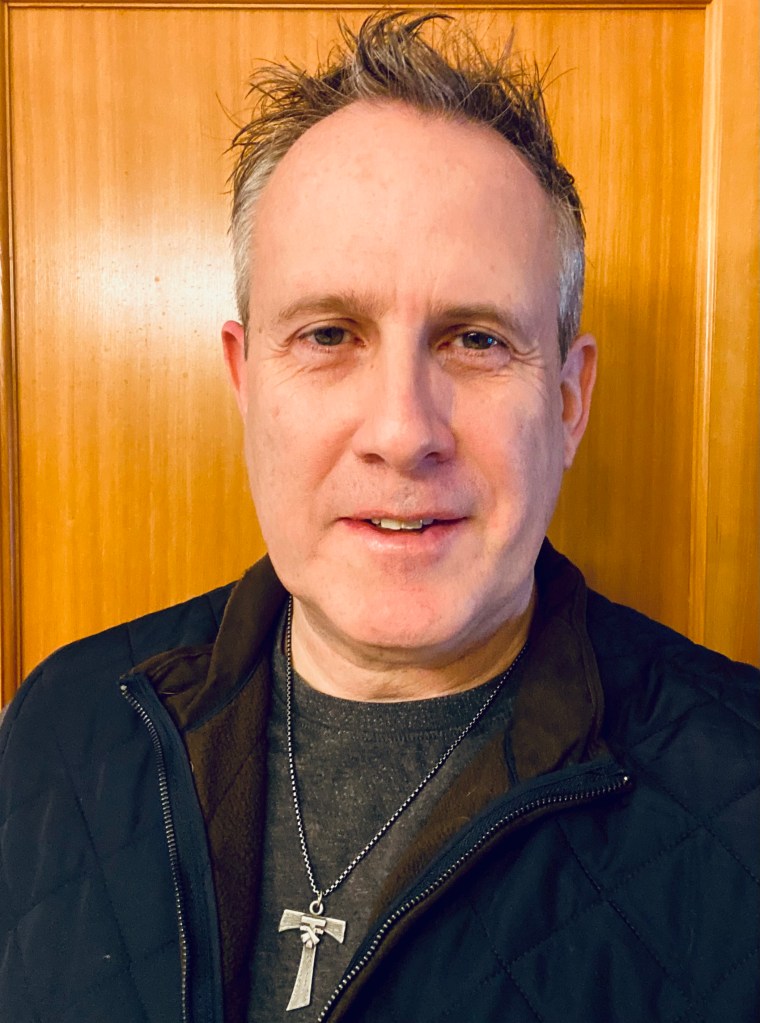
Tom Delaney, O.F.S.
Franciscan, Theologian, and Educator
I am Tom Delaney, a Secular Franciscan, Catholic theologian and educational psychologist dedicated to helping parish communities embrace the Gospel call to human flourishing and interpersonal forgiveness. My formation combines engagement with Franciscan tradition, study and practice of Catholic faith and spirituality, and scientific inquiry into human learning and human flourishing — all rooted in fidelity to Catholic teaching.
Formation, Credentials, and Associations
- Secular Franciscan (O.F.S.)
- Observing the Gospel by following the example of St. Francis of Assisi and attending to the urgent needs of humanity, especially the poor and afflicted.
- M.A. in Theology (Spirituality), St. Catherine University
- Applying wisdom in the sayings and instruction of early Christian monastic communities to support flourishing in contemporary Catholic living, especially the practice of forgiveness.
- M.A. and Ed.S. in Educational Psychology, University of Minnesota
- Applying scientific understanding of how people learn, how what people earn changes them (thoughts, feelings, behavior), especially for human flourishing in personal and community life.
- State Advisory Council on Mental Health and Children’s Mental Health Subcommittee, Behavioral Health Planning Council, the Governor’s Children’s Cabinet Mental Health Action Team, and the State Rehabilitation Council
- Certificate in Catechesis, St. Paul Seminary
- Applying the Catechism of the Catholic Church to give hope and care to persons afflicted with mental health challenges, their families and caregivers, and persons in recovery from mental health challenges.
- International Association of Catholic Mental Health Ministers
- Connecting faith and pastoral support in parish contexts.
- St. Cloud Diocese Mental Health Ministry Team
- Supporting individuals and families experiencing mental health challenges, their caregivers, loved ones, and pastoral leaders, by providing support, resources and spiritual accompaniment.
- National Native American Boarding School Healing Coalition
- Living Franciscan values by supporting Native American communities in healing from intergenerational trauma linked to historical boarding school policies and practices.
Building Communities of Human Flourishing
I am a Franciscan educational psychologist with over 30 years of experience building communities that support human flourishing for children, youth, young adults and families. My career includes community design and capacity building at the local school system level, state policy and programs level, and federal policy and programs level.
I completed my Master of Arts in Educational Psychology and Education Specialist degrees at the University of Minnesota, where my studies over time came to focus on the functions of education for human flourishing. My scholarship was recognized with the Corcoran Research Travel Award, the Robert & Corrie Beck Fellowship, the Multicultural Teaching & Learning Fellowship, and the Bush Foundation’s Creative Community Leadership Institute fellowship.
Partnerships for Education & Mental Health
I am currently engaged in building communities for human flourishing through work with my government and community partners in a number of state committees and workgroups:
- State Behavioral Health Planning Council
- State Rehabilitation Council
- State Advisory Council for Mental Health and Children’s Mental Health Subcommittee
- Governor’s Children’s Cabinet – Youth Justice Transformation Team
- Governor’s Children’s Cabinet – Mental Health Action Team
- Minnesota Council on Disability
- Direct Care and Treatment (DCT) Panel for Psychiatric Residential Treatment Facilities
- Adolescent Brain and Cognitive Development (ABCD) Community Liaisons
Promoting the Flourishing of Native American Students
Work to promote the flourishing of Native American students has also been an important focus of my work. My career began with founding an alternative high school to serve American Indian, and has included implementing a youth-led Dakota and Ojibwe language revitalization project through the Minnesota Indian Affairs Council, serving on Minnesota’s Indigenous Education Task Force, and currently serving as director of a federal grant to improve graduation rates of Native American students through establishment of mentoring programs in schools. I completed the Mnisota Dakhota Iapi Oyanke- (Minnesota Dakota Language Summer Institute) at the University of Minnesota. I am a member of the National Native American Boarding School Healing Coalition (NABS), a leading national organization dedicated to advocating on behalf of Native peoples impacted by U.S. Indian boarding school policies, that also seeks truth through education and research, justice through advocacy and policy, and healing through Indigenous teaching and traditional gatherings.
Teaching to Uplift the Poor, Afflicted, Discarded, and Excluded
Teaching is and always has been important to me as a response of care for the fulfillment of human purpose and potential, and especially as participation in God’s special concern and care for “those who are poor or in any way afflicted” (Gaudium et spes, 1) as well as the discarded and excluded (Pope Leo XIV, Urbi et Orbi, Christmas 2025). My teaching experience includes serving as an adjunct faculty or lecturer in the College of Education and Human Development at the University of Minnesota, the School of Education at the University of St. Thomas, Saint Catherine University, the University of Barcelona in Spain, and Hanoi National University of Education in Vietnam.
Catholic Faith Formation to Support Pastoral Care
My Catholic faith and ministerial formation includes a Master of Arts in Theology with a Concentration in Spirituality from St. Catherine University, where I researched how teachings of forgiveness and mercy in the verba seniorum (“words of the elders”) recorded in early Christian monastic communities of the Middle East are still relevant and important for us today. I completed my Certificate in Catechesis at St. Paul Seminary, with a focus on what the Catechism of the Catholic Church teaches that can uplift, encourage, and give hope to persons struggling with thoughts and feelings of desperation and despair. My membership in the International Association of Catholic Mental Health Ministers keeps me connected to a supportive community of people in dioceses and parishes who are also working to bring mental health ministry to every Catholic parish and community.
A Secular Franciscan Working Every Day from Gospel to Life
Living and working as a Secular Franciscan (O.F.S.) is my daily commitment to God and the world. The Secular Franciscan Order was established by St. Francis of Assisi more than 800 years ago, with the purpose of bringing the Gospel to life where we live and work. We look for ways to embrace the Gospel in our lives and try to help others to do likewise. I strive daily to work from this Franciscan principle of “Gospel to life” following Franciscan tradition and the Rule of the Secular Franciscan Order. It’s the first thing I do in the morning and it’s the last thing I do before I go to sleep at night.
Working as an educational psychologist is about two things: understanding how people learn things, and understanding how the things people learn change them. Working as a Franciscan who is also an educational psychologist means helping people experience learning that results in personal change toward a life that is fuller and more whole, in the ways that Jesus Christ explains in the Gospel (e.g. John 10:10, 14:27), and that we term as “human flourishing” in contemporary discourse. I could not do the work without the spiritual support of my community in the St. Cloud Fraternity and Queen of Peace Region of Secular Franciscans, and in my own parish of St. Henry Catholic Church in Monticello, Minnesota.
Designing and Facilitating Catholic Forgiveness Education
I completed training in forgiveness education and group facilitation through the Human Flourishing Program at Harvard University. Dr. Tyler VanderWeele is a publicly practicing Catholic scholar, and the director of the Human Flourishing Program. His groundbreaking research in human flourishing, forgiveness, love, and life in community, has been publicized through De Nicola Center for Ethics and Culture at Notre Dame University, the Plunkett Centre for Ethics at Australian Catholic University, the Harvard Catholic Forum, the Committee on Clergy, Consecrated Life and Vocations in the United States Conference of Catholic Bishops, the Catholic University of America, the Lumen Christi Institute, the Catholic Health Association of the United States, the 5th International Vatican Conference, and the Catholic Archdiocese of Melbourne. In addition, my instructor and ongoing contact at the Human Flourishing Program is Dr. Kate Jackson-Meyer of Catholic Theological Ethics in the World Church, whose work has been publicized through the Catholic Theological Society of America. Concepts of human flourishing from research at the Human Flourishing Program are an important and central component of the way I teach people about forgiveness, and you can learn more about them in this video:
“Let Us Begin Again…”
St. Francis of Assisi exhorted his brothers, “Let us begin again, for up to now we have done little or nothing!” I am a Secular Franciscan, and Live and Forgive is a forgiveness ministry project in response to St. Francis’ perpetual call for beginning again. I began Live and Forgive while I was simultaneously completing formation toward profession as a Secular Franciscan and completing training in forgiveness education and group facilitation through the Human Flourishing Program at Harvard University. My intention was to develop a Catholic forgiveness ministry project that would bring presentations, retreats, small group series, and wilderness walks to parishes and other Catholic communities. Live and Forgive is that project, and weaves together the faith and science of forgiveness with the Franciscan perspective of human flourishing. You can learn more about the Franciscan perspective of human flourishing in this video:
Why is forgiveness so important to me?
I am an ordinary person. There have been times when I needed to forgive, and there have been times when I needed to be forgiven – just like anyone else. I teach about forgiveness from the life experiences and perspective of someone who is an ordinary person, just like most people. Most people will be able to relate what I teach to their own experiences and feel able to engage in forgiveness. I firmly believe that the greater part of forgiveness in our world depends upon ordinary people. In that way, there is no one more important than ordinary people. Forgiveness is important for me and any other ordinary person because we are ordinary people. It is a wonderful thing that the forgiveness that is so important and needed in this world has been entrusted to its most ordinary people. This forgiveness is entrusted to us by God and can bring our whole world into the peace that Jesus Christ intends for us (John 14:27). That’s why forgiveness is so important to me.
Let’s visit!
Interested in finding out more? Contact me with an email to tom@liveandforgive.com so that we can visit, talk about your parish or community, and think about possibilities. I respect your effort in serving your parish or community and would enthusiastically value the chance to talk with you about how it’s going, what you may be looking to do next especially in connection with forgiveness, and see if we can come up with some good ideas. If it would be helpful for me to pick up a coffee on my way over, just let me know — I do that too! Let’s visit!
 Live and Forgive