(photo: Human Flourishing Program, Harvard University, 2025)
I started Live and Forgive as I completed a program in forgiveness education for faith leaders in the Human Flourishing Program at Harvard University. Dr. Tyler VanderWeele is the director of the program, and with colleague Dr. Jennifer Wortham, recently proposed improved definitions of moral distress and moral injury.
Forgiveness very often involves experienced moral distress and moral injury. Having good definitions and understanding of moral distress and moral injury helps make a forgiveness process more responsive to both.
Today I will share the main points of their research update, and will use future articles to explore all of these in more depth. Here are the main points for today:
Human persons are not only physical and mental creatures, but social, moral, and spiritual as well.
Moral understanding of right and wrong, and good and evil, is fundamental to who we are.
Moral understanding guides our actions and evaluations, and shapes our sense of integrity and wholeness.
Moral distress is distress that arises because personal experience disrupts or threatens one’s:
- sense of the goodness of oneself, of others, of institutions, or of what are understood to be higher powers
- beliefs or intuitions about right and wrong, or good and evil
Moral distress lies on a moral trauma spectrum including both severity and persistence of distress.
Moral injury is:
- a sense of guilt, shame, and confusion resulting from a a severe disruption of moral understanding by something we have done, witnessed, or been subject to
- caused by persistent moral distress
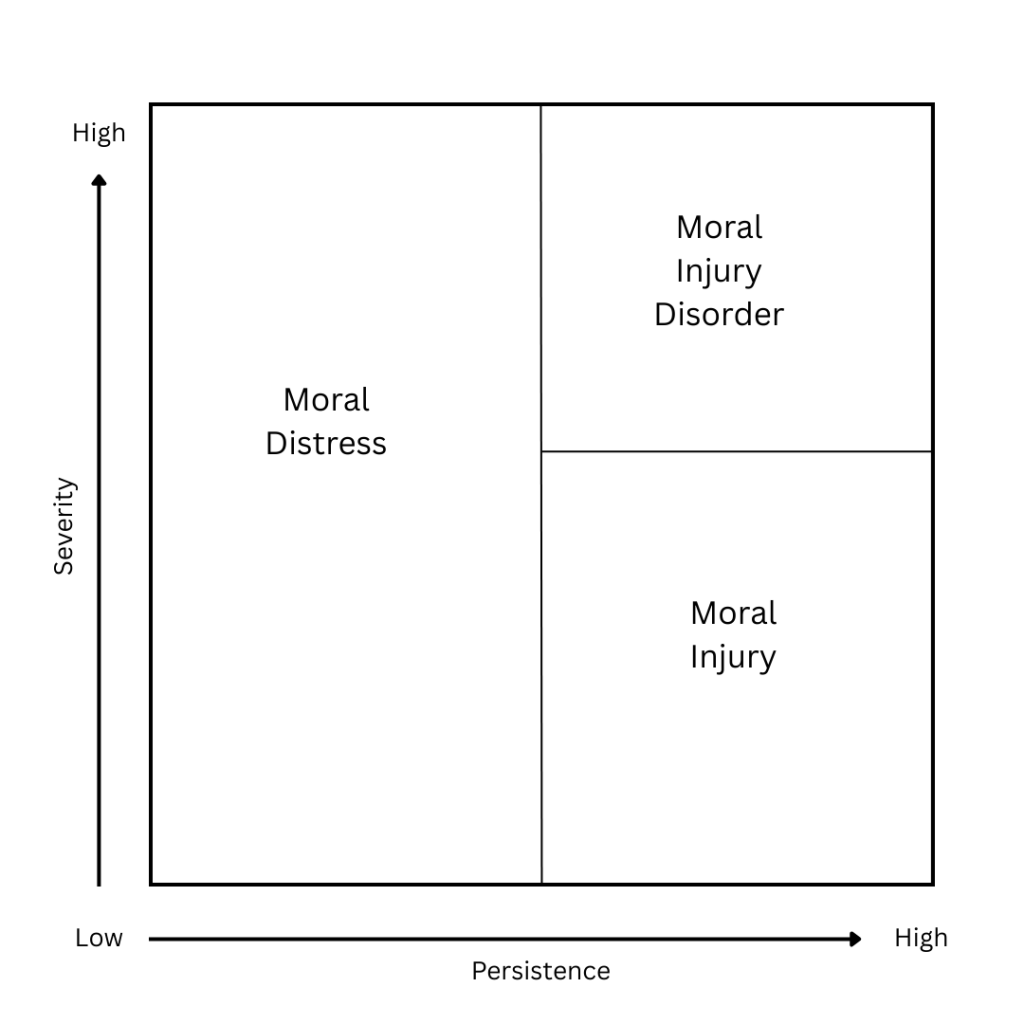
Moral injury disorder is moral distress so severe as to cause impairment in social, occupational, or other important areas of functioning in ways that are out of proportion or inconsistent with cultural or religious norms concerning such experiences.
Definitions of moral distress and moral injury can can be used in taking approaches to moral trauma, including its confusions, doubts, and concerns about:
- right and wrong
- good and evil
- goodness of oneself or others
Definitions of moral distress and moral injury can also be used in taking approaches to symptoms of moral trauma including:
- guilt
- shame
- betrayal
- anger
- powerlessness
- hopelessness
- loss of meaning
- struggles with faith
- struggles with forgiveness
- loss of trust
This text is an original work of its author Tom Delaney and was entirely composed without the use of artificial intelligence (AI).
If your parish or faith community is seeking a deeper experience of forgiveness, healing, mercy, and spiritual renewal, Live and Forgive is here to help. To begin the conversation, email Live and Forgive presenter and facilitator Tom Delaney at tom@liveandforgive.com — he will be glad to connect with you for conversation.
 Live and Forgive