
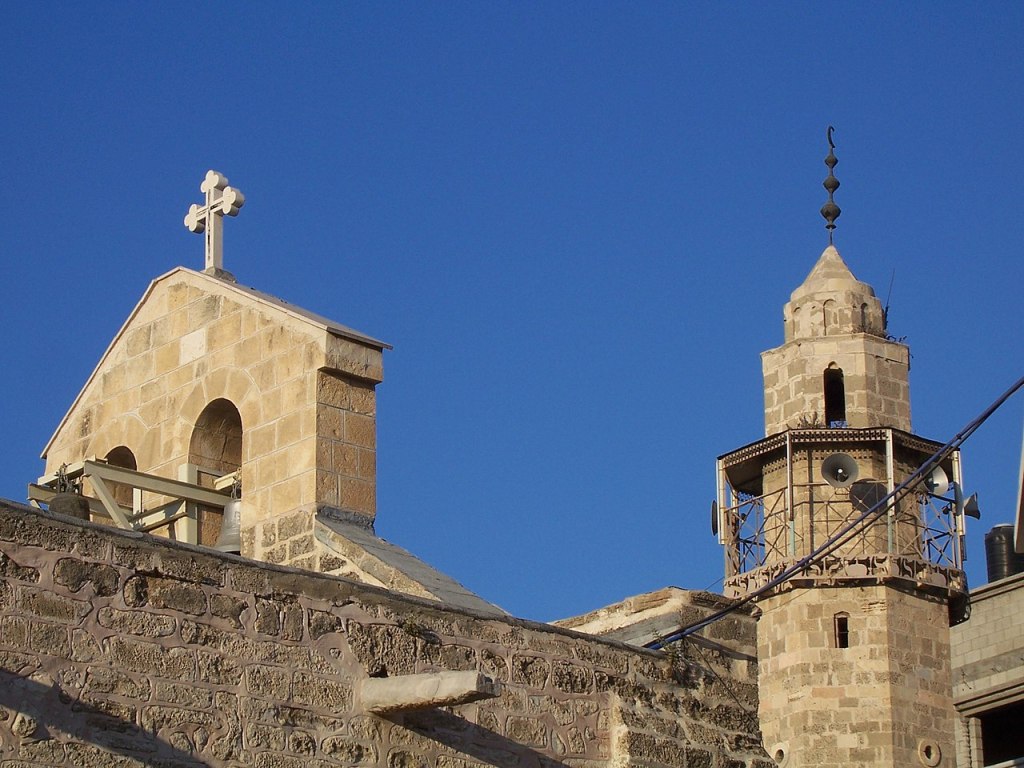
“Can religion help in peacebuilding?”
That was the basic question today in a webinar I attended that was conducted by the Strategic Religious Engagement (SRE) Hub at the Berkley Center for Religion, Peace, and World Affairs at Georgetown University. My quick reaction to the question was, “Seriously? Of course, religion can help in peacebuilding!”
Peacemaking in Franciscan Tradition
In my world, the Gospel is replete with revelation that peace is what God intends for us, and that even the most ordinary and lowly among us is blessed and sanctified in their ability to be and bring peace wherever they are. “Blessed are the peacemakers, for they will be called children of God” (Matthew 5:9). The Secular Franciscan Rule to which I have made a permanent commitment makes clear, “Mindful that they are bearers of peace which must be built up unceasingly, they should seek out ways of unity and fraternal harmony through dialogue, trusting in the presence of the divine seed in everyone and in the transforming power of love and pardon.” In my Franciscan tradition, I frequently revisit the story of St. Francis of Assisi and Sultan Malik al-Kamil meeting in dialogue and peace as war raged around them. I also think that there is a lesson in why Franciscans dedicated to humility, peace, and compassion, were chosen to be the Custodians of the Holy Land. As the Custodia Terrae Sanctae says, since the time of Gregory IX to this day, it is better and above all more evangelical to try to coexist and dialogue with Muslims instead of fighting them.
Still, to me it is a paradox that the Holy Land, a focal center of three of the world’s great religions, is one of the bloodiest places in the world. In my own Christian and Catholic faith, that includes the blood of Jesus Christ. I can add to the paradox by considering that a translation of Jerusalem can be “flowing with peace.”
Religion in Peacemaking
One of my favorite scholars in the field of forgiveness, reconciliation and peacemaking research, Mohammed Abu-Nimer, was a panelist in the webinar. Dr. Abu-Nimer explained that one could quickly think that religion has a positive and contributory function in peacemaking, because peacemaking is historically based in religious and cultural diversity. The problem today is that the world increasingly sees religions and religious faith used to justify war and violence. Dr. Nimer explained a process for restoring religion to a positive and contributory function in peacemaking:
- Denial: “Religion doesn’t exist in peacemaking.”
- Defense: “Religion exists in peacemaking, but it doesn’t work.”
- Compartmentalization: “Religion exists and works for peacemaking, but only in one circumstance or way and not another.”
- Integration: “Religion exists and works for peacemaking, in many circumstances and many ways, as part of the peacemaking process.”
Religion, Peacemaking, and Cell Phones Everywhere
I think that another factor to consider is that peacemaking is not limited to “on the ground” efforts anymore. Peacemaking now includes the sphere of the internet, social media, influencers, content creators, and political propaganda. At the same time, we see the presence of religious denominations on the internet and their apps on our phones more than ever before, and its only increasing, including podcast celebrities, content creators, and influencers. There’s a lot going on, and it has a lot of power depending on which direction it gets pointed and for what purposes.
That all said, the internet already gives me the ability to meet, communicate with, and partner with people in a conflict zone like Palestine at very little cost. Now that cell phones with data plans and internet access have made their way into practically every corner of the world, I can’t help but think that it has never been easier to communicate ideas for peacemaking and give people access to those ideas in ways that they can turn around and use in order to make their lives better. We just have to compete well against the things on the worldwide web that would turn people to do otherwise.
Religion and Peacebuilding Action Guides
The Strategic Religious Engagement (SRE) Hub at the Berkley Center for Religion, Peace, and World Affairs conducted the webinar to publicize their resources for persons engaged directly in peacemaking work. “Religion and Peacebuilding Action Guides,” a set of tools developed over the past decade to support conflict analysis, mediation, and collaboration between religious actors and peacebuilding practitioners.
The guides are worth checking out, especially the Reconciliation Guide. Franciscan Fr. Roberto Pasolini (OFM), the preacher for the papal household, recently explained that conversion in faith is also followed with fraternity, but that the involved discovery of faith must compel us to move beyond the comfort of fraternity to the work of our mission. When the mission is peacemaking in and between communities, these may function as tools or at least exemplars of tools that can be developed.
Please share this information with someone today.
Additional Reading: ‘War knows no religion’: Gaza’s oldest church shelters Muslims, Christians (Al Jazeera, 2023)
This article is an original work of the author and was not composed by or with artificial intelligence (AI). The author is solely responsible for the contents of this article and the opinions and perspectives expressed in the article are solely those of the author. © 2026 Thomas Delaney. All rights reserved.
top photo: Church of Saint Porphyrius and Katib al-Wilaya Mosque, Gaza, Rahim Abaid, 2005
If your parish or faith community is seeking a deeper experience of forgiveness and wellness for inner renewal and spiritual growth, Live and Forgive is here to help. To begin the conversation, email Live and Forgive presenter and facilitator Tom Delaney at tom@liveandforgive.com — he will be glad to connect with you for a conversation.
Please type in your email and click “Subscribe” below to stay connected and get Live and Forgive articles delivered to you.
Take your learning deeper! Enter the term or word for any idea or thing you saw in this article that you want to know more about, and you will get a list of other articles that also talk about that idea or thing!


Leave a Reply