
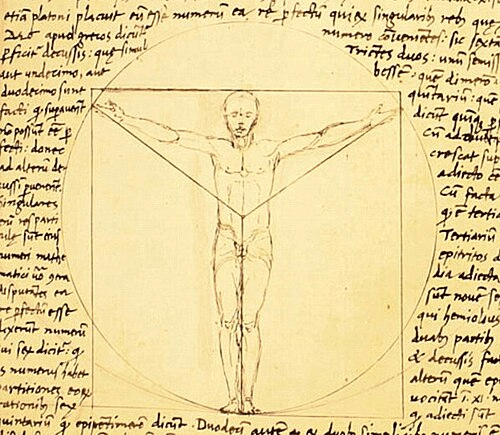
If you and I can agree that being a human being is basically a good thing, then we can talk about our lives being even better by being even more human. We can talk about what “humanizes” and what “dehumanizes.” What humanizes us is good, because it levels up the good things about being human. What dehumanizes us deprives us of the good things about being human. You get it: “humanize” good, “dehumanize” bad.
There is a lot of concern right now about advanced technology dehumanizing us, and if we want to keep for ourselves the things that are good about being a human being, we should pay attention and ask the questions, “When does technology humanize us?” and “When does technology dehumanize us?”
An Example
This week a young man related to me how an online video had ruptured relationships within his shared living arrangement in a house with other young men. One of his housemates was showing anyone who would watch it a video from social media on his phone that made fun of a recently deceased celebrity. This young man refused to watch his housemate’s video and shared that he felt it is morally wrong to watch a video making fun of a recently deceased person, celebrity or not. The interaction caused conflict and animosity that lasted for weeks. The young man tries to approach his housemate for reconciliation of their relationship, but the housemate wouldn’t have any part of that. Now the animosity is even resulting in the young man moving out of the house.
There are quite a few aspects of humanization and dehumanization in that story. We can start with the video, reducing a recently deceased celebrity to an object of ridicule and entertainment, disregarding all of the other things that made that celebrity a human being like any of us. That’s dehumanization. The video invited and attracted the housemate to participate in the dehumanized view of the celebrity and adopt it for himself — which he did with zeal. That’s dehumanization. The young man tried to humanize the video situation with his housemate by reintroducing the idea that the celebrity is a human being, worthy of dignity even in death, and not simply an object of ridicule and entertainment. Unfortunately, that didn’t work, and in its failure contributed further to the dehumanization going on in the situation. Later the young man tried to do something radically humanizing: reconciliation.
It is hard to name anything as humanizing as forgiveness and reconciliation. It involves both people seeing each other as human in a deeply profound way. It is an act that acknowledges the human condition, with its vulnerabilities, flaws and failures, aspirations and intentions. The process of forgiveness and reconciliation transforms a relationship by moving vulnerabilities, flaws and failures, aspirations and intentions, from being the things separating two people in animosity and enmity, to reuniting two people in human vulnerability and profound mutual understanding. The human vulnerability is actually what makes the process so powerful for the two people who participate in it, “for in weakness, power reaches perfection” (2 Corinthians 12:7-10 in lauds for today’s Liturgy of the Hours).
That all said, the housemate turned away from the invitation to reconciliation and the humanization of forgiveness. The social media video won the contest in his heart.
I work in the field of disability justice, and I know that assistive technology can do wondrous things to improve possibilities for a person with a disability to fulfill their human potential and capabilities. That is a good use of technology that I think has to be seen as humanizing. But the story of the young man and his housemate points to the dehumanizing potential of technology, and especially to its dehumanizing ability through shutting the door on forgiveness and reconciliation. Which way we use technology – for humanization or dehumanization – is up to us, and we will make better decisions if we consider whether technology in any form is enhancing our common everyday ordinary abilities to forgive and reconcile, or take that away from us.
Whether we have a world with forgiveness depends mostly upon everyday ordinary abilities to forgive and reconcile. The good news is that the world is by fa mostly populated by everyday ordinary people like you and I, which means we have a veritable army of forgiveness if we would just realize that we have that power — the power to transform the world. This world transformation in forgiveness is not a a giant all-at-once event, but rather will happen through the acts of forgiveness happening in our ordinary everyday interactions with each other. I’ve been saying it for a while, and now Pope Leo has said it too:
“The civilization of love will not arise from a single or spectacular gesture, but from the sum total of small and steadfast acts of fidelity that serve as a bulwark against dehumanization. For this reason, it is worthwhile pausing to reflect on some aspects of how we, each in our own way, can cooperate in building the civilization of love” (Magnifica Humanitas, 213)
According to a cheap quiz I took once, affirmation is my love language. Maybe its yours too, who doesn’t like affirmation? Pope Leo’s affirmation for us is clear: we, each one of us, can build a worldwide civilization of love. Next time you look in he mirror, you simply must see the reflection of a humanizer and builder of a civilization! That’s you! Now make it happen today!
Today, try to watch yourself a little more closely, and in each thing you do, just check whether it is humanizing or dehumanizing, especially with your use of technology:
- Are you using technology to be a better human being? For yourself? For others?
- Does the technology you use safeguard the worth and dignity of human beings, or disregard it?
- Do you value your relationship with others more than you value what you derive from a way you use technology?
- Do you think about the needs and dignity of others when you use technology?
Where you come up short and see you could do better, don’t get bummed out and call yourself a loser. Just really put some effort into:
- noticing it
- observing how it’s happening
- thinking about how you came to be in that relationship to technology
- figuring out one very good alternative that you will work on making happen for yourself to change that relationship to technology
And if someone approaches you wanting to forgive and reconcile, see it as a possibly incredible opportunity to humanize and be a better you. Give the opportunity some good consideration.
Please share these words with someone who needs them today.
Tom Delaney. O.F.S
This article is an original work of the author and was not composed by or with artificial intelligence (AI). The author is solely responsible for the contents of this article and the opinions and perspectives expressed in the article are solely those of the author. © 2026 Thomas Delaney. All rights reserved.
artwork: Vitruvian Man, Giacomo Andrea, 1490


Leave a Reply