
The Things We Pray For
All around the world, in every culture and religion, people ask for a lot of differen things that they think will help them. Over time, some prayers become popular as they become expressions of what a lot of people wish for in their lives. One of these prayers is the Prayer of St. Francis. In the Prayer of St. Francis, we say:
“In that place where there is darkness, may I bring light.”
This small prayer is embedded within the larger Prayer of St. Francis, and expresses that the person making the prayer sees a kind of darkness happening among people in general, and wishes to be a person who brings the light that dispels the darkness.
What’s the problem with darkness?
Darkness is something we see in nature all of the time. The descriptions of the creation of the universe in many cultures around the world usually begin with darkness. We can understand darkness as the visible sign and symbol of potential and creativity. In a similar way, our days include both a time when the sun is with us, and also a time when the sun is absent from us, much like the beginning of our universe. There is even a theory t hat a black hole is not created by the absence of light, but by the absorption of all available light with their intense gravitational pull. During this time of darkness, we have a natural inclination for repose and rest. Science now tells about the importance of darkness for getting a good night’s sleep. Our own physical, mental, and spiritual selves seem to have deep, important, and even healthy connections to darkness.
We’ve all had the experiences of looking for something in the dark, or trying to walk through a furnished room in the dark without stubbing a toe, or driving at night. In those circumstances, darkness presents something of an adversity to us, because we simply can’t see. It’s a stretch to think that darkness is malevolent, malicious, or intentionally trying to thwart us. It’s just super inconvenient and a challenge to using our senses of vision. We can’t see what’s there.
I’m reminded of an old joke. There was a man crawling on the ground under a street light. Another man asked, “Hey! What are you doing?” The first man replies, “I am looking for my keys! I lost them in the park!” The second man, perplexed, asks, “If you lost your keys in the park, why are you looking for them under that street light?” To which the first man replies, “Because there’s more light over here!”
How does a grudge, resentment, or enmity make darkness?
When you make a home for a grudge, resentment or enmity in your mind, it generates darkness in the sense that it casts shadows that makes other things difficult to see. This is a problem when the things that are difficult to see are the present moment, the good things in life, or the potential of love in our relationships. Much like any shadow we see, the shadow does not just make the thing that casts the shadow darker (on one side), it also makes other things dark and more difficult to see: things that we need to be our best selves with healthy and fulfilling lives.
How do we bring light to the darkness? — Forgiveness!
When our best selves, and our own health and fulfillment are involved, it is important to find some light to remove the shadows on these things caused by a grudge, resentment, or enmity. Lucky for us, there is a way to do that!
Scientific research has helped especially see how forgiveness removes this kind of darkness. When people engage in a research-validated practice of forgiveness like the REACH process I use in Live and Forgive, people report benefits to their mental health and a renewed sense of happiness and personal meaning.
If I were to explain what the light of forgiveness is, I would say that it is the process of finding empathy with the wrongdoer. The empathy is found by giving attention to the ways that we are the same as a wrongdoer, and how we may have done the same thing as they did if we were in their shoes. This new information “comes to light” and has the effect of opening the door for forgiving someone. This is an important step in the REACH forgiveness process, where “E” stands for empathy.
St. Francis of Assisi would encourage us to never underestimate the power of light brought by even a small forgiveness. In the words of St. Francis himself:
“A single sunbeam is enough to drive away many shadows!”
This is good news for a lot of people, includng you and me.
For Today
For today, take a look at whether you have a grudge, resentment, or enmity, that is shading the goods part of your life, and your ability to appreciate the good parts of your life. Do you have a grudge, resentment, or enmity that is casting a shadow that is too long, too wide, for what the size of the memory actually is? If you could get those shadows back down to size, or even get rid of them completely, would you do it? Is it time to learn more about forgiveness and turn on the lights?
Please share these words with someone who needs them today.
Tom Delaney, O.F.S.
This article is an original work of the author and was not composed by or with artificial intelligence (AI). The author is solely responsible for the contents of this article and the opinions and perspectives expressed in the article are solely those of the author. © 2026 Thomas Delaney. All rights reserved.
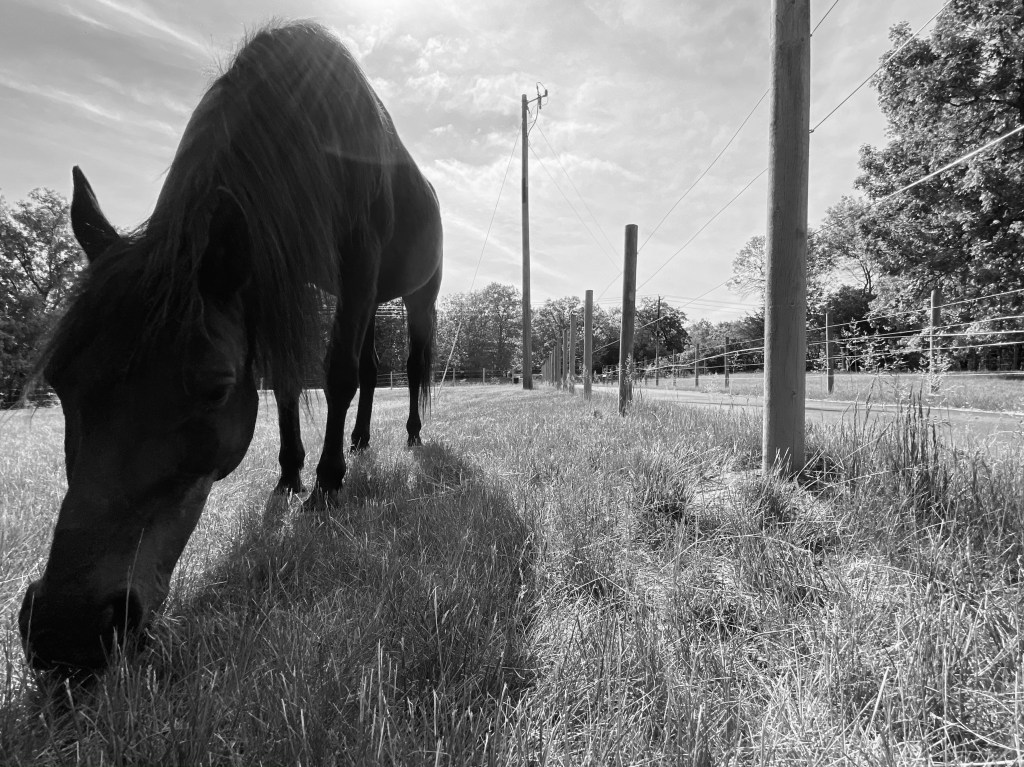
photo: Sherburne County, Minnesota (USA), Thomas Delaney O.F.S., 2026 “Always remember that it’s the grudge, resentment, or enmity that casts a shadow, not the sun itself — the sun doesn’t have a shadow.”


Leave a Reply