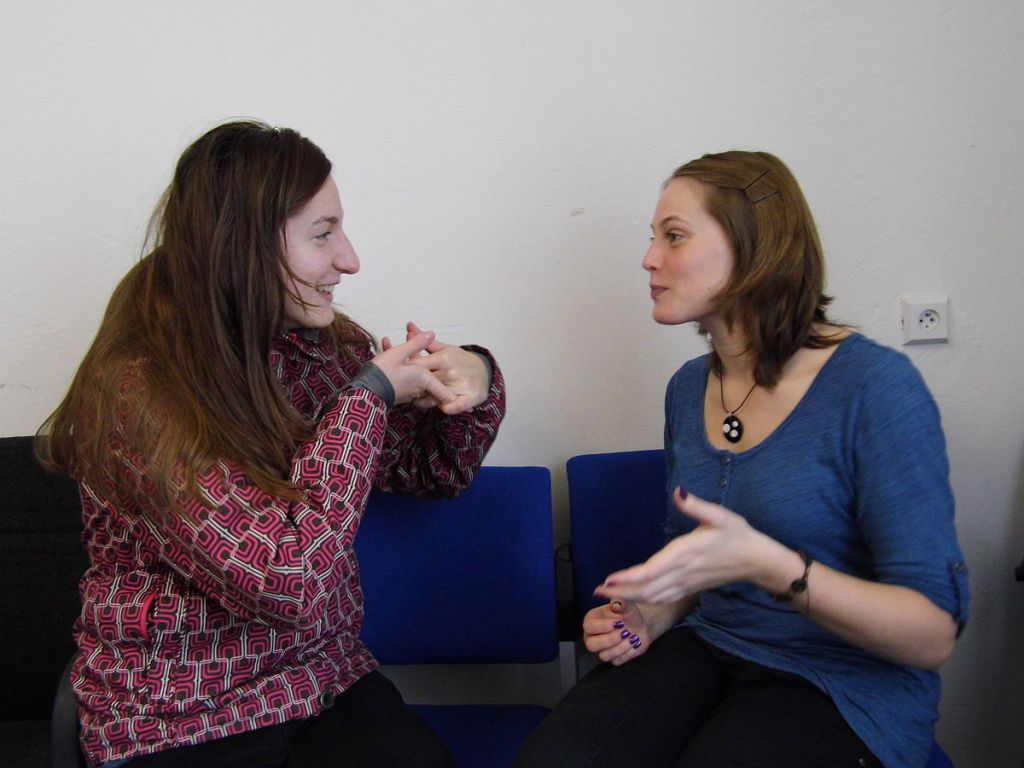
(photo: Čeština, Mikhail Gorbunov, 2012)
There are two scientifically validated forgiveness processes, and empathy of the forgiver toward the person being forgiven is the key in both of them. One forgiveness process is the REACH Forgiveness Process developed by Everett Worthington, and the other is Guideposts for Forgiving developed by Robert Enright. In both processes, empathy is the realization of the fundamental human sameness of the forgiving person and the person being forgiven, the recognition that our perspectives and actions are often very much influenced by our circumstances, and that the same person would act one way in positive and supportive life circumstances and act a very different way in negative and unsupportive life circumstances. This separates the offender from the offense, in a way that begins an echo of the adage, “Hate the sin, but love the sinner” (cf. “With love for mankind and hatred for sins,” St. Augustine, Letter 211).
In this way, the forgiving person is able to see that they can forgive another person because the hurt or offense that person committed is very much a result of background negative contexts that understandably would bring many if not most people to act in the same way. Like forgiving in general, empathy does not excuse the act or erase the injustice of it, but it does open the door to the possibility of forgiving a person for their act.
In Guideposts for Forgiving, researcher Robert Enright suggests several questions that the forgiving person can answer in order to arrive at the empathy needed for the forgiveness process. Here are some paraphrased examples:
- What was life like for the person when they were growing up?
- What was the person’s situation or circumstances at the time of the hurtful act?
- How is your relationship with the person? Note also if you do not have a relationship at all, and you are a totally nameless face to the other person.
- How do you see the other person if you look at their true humanity from a global perspective instead of your persona perspective?
- How do you see the person if you look at them, the event in your life, and your own life, from a cosmic perspective, seeing the other person in a religious and spiritual sense?
In the REACH Forgiveness Process developed by researcher Everett Worthington, additional questions include:
- Have I ever done the thing that this person did to me, or can I understand the act because I have felt like doing it myself?
- Is there a chance I would have done the same thing under the same circumstances as the other person was under?
In addition, a useful exercise in the REACH Forgiveness Process is the “Empty Chair” exercise. In this exercise, you get two chairs and position them to face each other. Then, you first sit in one chair and recount the hurtful event in detail, with clarity, and especially your emotional experience of the event, the emotional aftermath of the event that it had on you, and other impacts on your life. Next, you sit in the other chair and speak from the perspective of the person who hurt you, recounting to the best of your knowledge how the person’s past (including childhood experiences) and present circumstances led them to committing the hurtful act, their experience of the act at the time, and honest statements about how the act was a reaction to their situation. It can be very challenging to open oneself up to the possible perspectives and situational factors of the person who hurt them. This exercise often helps people realize how a hurtful event usually has causes in the past wounds and present negative factors at the time for the hurtful person, and that they brought with them to the situation to begin with.
It is worth remembering that Jesus taught us to have a great empathy, including for people whose transgressions have been so great as to land them in prison. Jesus explained (Matthew 25:34-40):
Then the king will say to those on his right, ‘Come, you who are blessed by my Father. Inherit the kingdom prepared for you from the foundation of the world. For I was … in prison and you visited me.’ Then the righteous* will answer him and say, When did we see you … in prison, and visit you?’ And the king will say to them in reply, ‘Amen, I say to you, whatever you did for one of these least brothers of mine, you did for me.’
We know that in another section of the Gospel of Matthew, Jesus explains that “brothers” to him are “whoever does the will of my heavenly Father” (12:50). So when we see “least brothers of mine,” (25:40) we can know that Jesus is talking about the people who least do the will of the Father. A person who has hurt us may be the least brother or sister, but even then, Jesus wants us to see him in that least brother or sister: “…whatever you did for one of these least brothers of mine, you did for me.” That was Jesus’ empathy for the imprisoned least brother. We can learn that empathy from Jesus’ example and approach it ourselves when we regard the person who hurt us, that least brother or sister, with our own empathy. It may be very, very, difficult — but we are always accompanied by him who has the greatest of all empathy and has promised to be our friend, companion and helper. You never have to go it alone, just pray and ask for the help. You will receive it!
Please share these words with someone who needs them today.
This text is an original work of its author Tom Delaney and was entirely composed without the use of artificial intelligence (AI).
If your parish or faith community is seeking a deeper experience of forgiveness, healing, mercy, and spiritual renewal, Live and Forgive is here to help. To begin the conversation, email Live and Forgive presenter and facilitator Tom Delaney at tom@liveandforgive.com — he will be glad to connect with you for a conversation. Please type in your email and click “Subscribe” below to stay connected and get Live and Forgive articles delivered to you.
Take your learning deeper! Enter the term or word for any idea or thing you saw in this article that you want to know more about, and you will get a list of other articles that also talk about that idea or thing!
 Live and Forgive