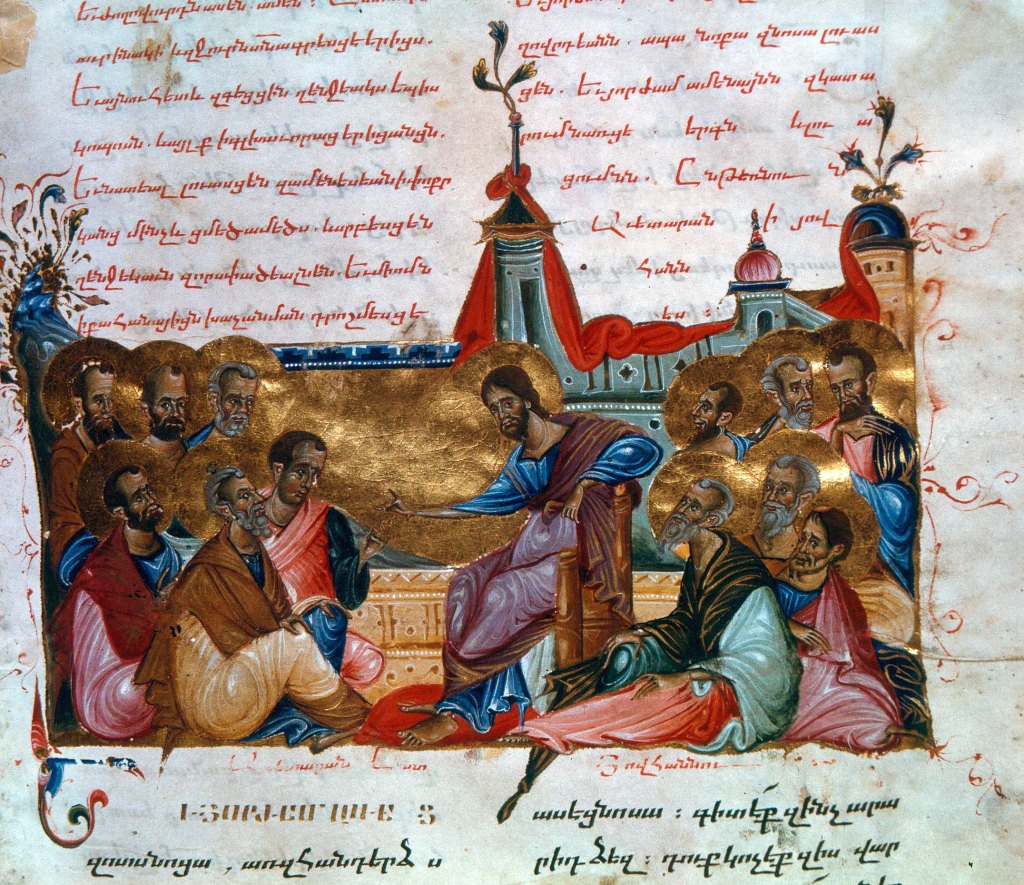
Today’s Liturgy of the Word includes a reading from the Gospel of Luke (17:1-6) that is a cornerstone for forgiveness as Christian faith in action. In this section of the gospel, Jesus teaches his disciples:
If your brother sins, rebuke him; and if he repents, forgive him.
And if he wrongs you seven times in one day and returns to you seven times saying, “I am sorry,” you should forgive him.
It is important to understand a few things about this short but compelling teaching of Jesus.
The first part of the teaching directs us to pay attention to the moral wrongdoings or shortcomings of others in our relationships, not excuse or ignore them, More specifically, the original Greek word in the gospel that is often translated to “rebuke” is ἐπιτιμάω (“epitimao”). Rather than the harshness and condemnation that we may quickly associate with the word “rebuke,” epitamao originally meant to more simply warn or correct, even in a warm and gentle way. Jesus did not teach his disciples to condemn, humiliate or renounce, and did not teach that the truth of moral wrongdoing or shortcomings be covered up (see Pope Leo’s catechesis later in this article). Rather, Jesus taught that the disciples are to teach within their relationships with others, and to do so always to with love. This relationship is also to include forgiveness of the other person in the relationship when they repent (meaning “think again” or “change their mind”) and see their own moral wrongdoing or shortcoming. Jesus does not state that there are any exceptions to be made to this forgiveness. The teaching is short, simple, and very clear.
In the next part of the teaching, Jesus builds on the first, and teaches his disciples to always have a disposition of mercy and forgiveness, i.e. a constant readiness, tendency, and a practical desire, to forgive. Jesus makes clear that the disciples should be ready to forgive even the great and symbolic number of seven times in one day. The point is that discipleship with Christ means having that constant readiness, tendency, and desire to forgive.
Pope Leo XIV explained well this spirit of the forgiveness taught in the very compelling catechesis within his General Audience of August 13, 2025:
Jesus does not denounce in order to humiliate. He tells the truth because he wants to save. And in order to be saved, it is necessary to feel: to feel that one is involved, to feel that one is beloved despite everything, to feel that evil is real but that it does not have the last word…The Gospel does not teach us to deny evil, but to recognize it as a painful opportunity for rebirth.
Pope Leo’s words clarify that the point of forgiveness “seven times” is not to ignore or excuse injustice, but rather use its truth to constantly and repeatedly present an opportunity for the other person to experience love, the opportunity to learn and change (repent), and the invitation for rebirth into a life of love. As Pope Leo explained:
Ultimately, this is hope: knowing that even if we fail, God will never fail us. Even if we betray him, he never stops loving us. And if we allow ourselves to be touched by this love – humble, wounded, but always faithful – then we can truly be reborn.
Please share these words with someone who needs them today.
This text is an original work of its author Tom Delaney and was entirely composed without the use of artificial intelligence (AI).
If your parish or faith community is seeking a deeper experience of forgiveness, healing, mercy, and spiritual renewal, Live and Forgive is here to help. To begin the conversation, email Live and Forgive presenter and facilitator Tom Delaney at tom@liveandforgive.com — he will be glad to connect with you for a conversation. Please type in your email and click “Subscribe” below to stay connected and get Live and Forgive articles delivered to you.
Take your learning deeper! Enter the term or word for any idea or thing you saw in this article that you want to know more about, and you will get a list of other articles that also talk about that idea or thing!
 Live and Forgive