
This article is for Catholics and anyone who feels and sees a need for change in their life, especially with a desire to experience greater wellness for themselves than what they are experiencing in their current situation. This article explains how openness to change is required for attaining and improving wellness and the personal and environmental factors involved with that. Guidance on becoming open to change and starting the personal process of change is provided. The article explains that God desires wellness for us as much if not more than we desire it for ourselves. In addition, achieving wellness requires an openness to change regardless of our personal situations, history, or station in life. The article draws upon insights from Franciscan Fr. Luke Gregory (OFM) of the Custody of the Holy Land.
Can you remember the most important times you’ve prayed? I can tell you about the time I prayed as I held hands with a couple fellow travelers from Mexico as our plane plunged thousands of feet in a tornado system coming into Texas. I can tell you about the time I asked God to keep the big calculation of the universe squared up with regard to my newborn son’s brittle bone disease. Those were important times for prayer that I still remember. And I’ll tell you about another one…
There I was, sitting on a corner bus stop bench with no walls or roof in an “inches per hour” blizzard. Sitting on a side road somewhere between Nowhere Avenue and Never Heard of It Boulevard at about 10:00 at night, I began wondering whether I was going to get home or maybe I could stick it out until the first bus of tomorrow morning came through. It was my crowning moment of a life I was spending hustling from one job to another, relying on unreliable transportation, and burning the candle not just on two ends but adding a third one just so I could burn that one too. Sitting on that bench, cold, tired to the bone, and watching my legs and lap and every inch of me getting buried in snow, I yelled into the darkness: “Please God! I need a better life! Please!” That was my prayer for wellness, and that night was the beginning of big changes I made in order to get to wellness.
Trust me, I’m not going to tell you anything that I haven’t had to go through, figure out, and do for myself.
What is wellness?
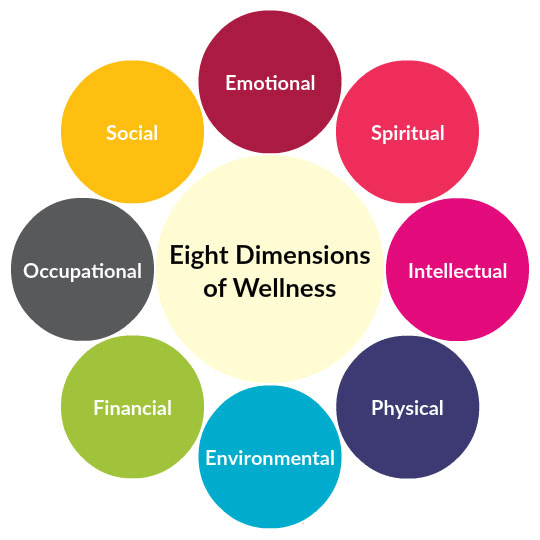
When it comes to wellness, a good definition will help us understand and set our sights on attaining or improving wellness in our life. My favorite illustration of wellness is the multidimensional model promoted by the federal Substance Abuse and Mental Heath Services Administration (SAMHSA). It integrates different aspects of a person’s life into an overall general picture of what wellness looks like.
SAMHSA, 2026
This model of wellness has eight dimensions that we experience in our every day life, and that are all interconnected to each other. A change in one will easily have impacts on other dimensions, and wellness is a state of things being good across all eight dimensions. In this way we can understand that working on our wellness is an effort on a number of things all at once. Sometimes that effort looks like working on one thing so as to improve not just that thing but also see benefits in other dimensions of wellness. Other times working n wellness can look like working on a number or all of the dimensions at once.
Wellness at the Convergence of Science and Catholic Faith
This model of wellness is also another place where science and Catholic faith converge. When you look at the dimensions, you will see a Physical dimension, as well as a Spiritual dimension. We can also note that there is a Social dimension, an Emotional dimension, and an Intellectual dimension that we can think of as relating to what we know about ourselves and the world in general.
When we look at the Gospel narratives of healing, we will see that his healing ministry very much consisted of addressing these dimensions for someone in suffering. Especially in cases of healing a physical condition, we also see the physical healing involving the other dimensions of:
- social status (especially in the healing of persons with leprosy)
- knowledge and understanding of the healed both before and after being healed
- emotional state before healing and the emotional impact of healing
- transformation of spirituality on many levels and in many ways
Franciscan Fr. Luke Gregory (OFM) rightly observes, “The physical and emotional healings performed by Jesus reveal the deep connection between soul and body, emphasising that spiritual and physical well-being are intertwined” (2026). The point that we can conclude is that God is concerned for not just one part of our wellness, but our wellness in totality, and our wellness as a whole. As Franciscan Fr. Luke Gregory also explains, “Jesus’ healing ministry reveals God’s compassion and desire for wholeness in our lives.”
Getting to Wellness: Thoughts, Feelings, and Behaviors
As soon as we get a clear picture of wellness for ourselves, we also quickly see that in order to get there, or to improve our wellness, we need personal change. This kind of personal change will require us to let go old ways of thinking, feeling, and acting (i.e. behaviors), in order to get to new ways of thinking, feeling and acting (i.e. behaviors).
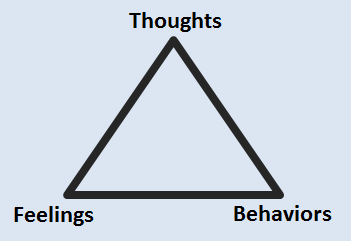
That kind of change in our thinking, feelings, and actions requires of us an intentional and very important openness to change from the start. In this way, getting to openness is important right away, and really is the first step toward better wellbeing.
How is wellness important to us?
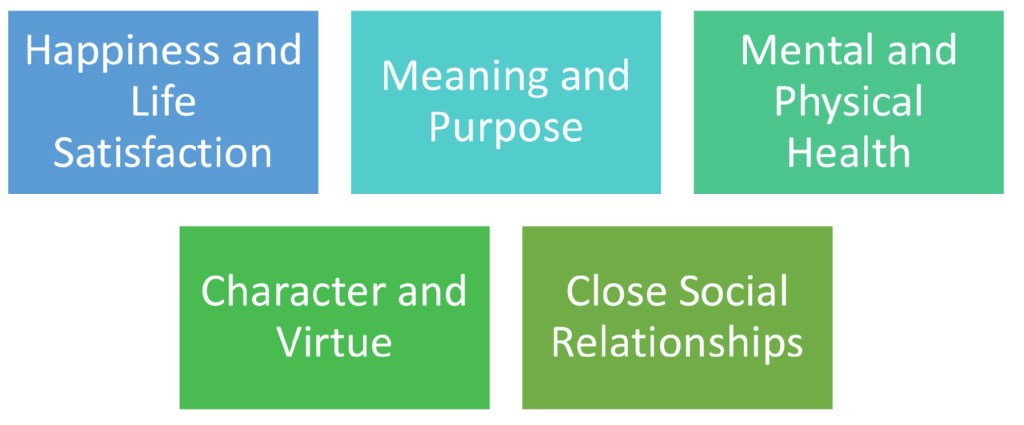
Well-being is important in and of itself, because we generally feel well, healthy, and good when we are in state of well-being. Well-being is also important because it fulfills our own personal potential, in a very meaningful way that is called “human flourishing.” When we experience human flourishing, we experience a deep sense of our personal:
- Identity and meaning of life
- Uniqueness, strengths, gifts, potential and purpose
- Life status in which the most important aspects of our life are good, including our own life situation:
- Happiness and Life Satisfaction
- Meaning and Purpose
- Mental and Physical Health
- Character and Virtue
- Close Social Relatonships
Harvard Human Flourishing Program, 2025
What’s the big picture for wellness?
Our wellness is a daily experience for us, and is influenced by the experiences we have every day. Our experiences come from forces and factors always at work around us that make the environment for our perceptions, thoughts, and feelings. Some of the factors and forces are in our immediate environment, and very personal to ourselves. Other forces and factors may not be visibly at work in our environment, but are there nonetheless and part of our daily experiences.
In this way, the world we see, hear, experience, and respond to every day, all day is actually a set of environments that we are always in and walking through. One of these environments is close, immediate, and what we easily think of as personal — quickly seen and experienced as part of our day. Other environments are much larger more broad than our immediate personal environment, but are at work and our an environment to us as well. One environment is located within another, with the one exception of time and the divine economy (Catechism of the Catholic Church, 257-260). Here is my version of how you can think of these environments:
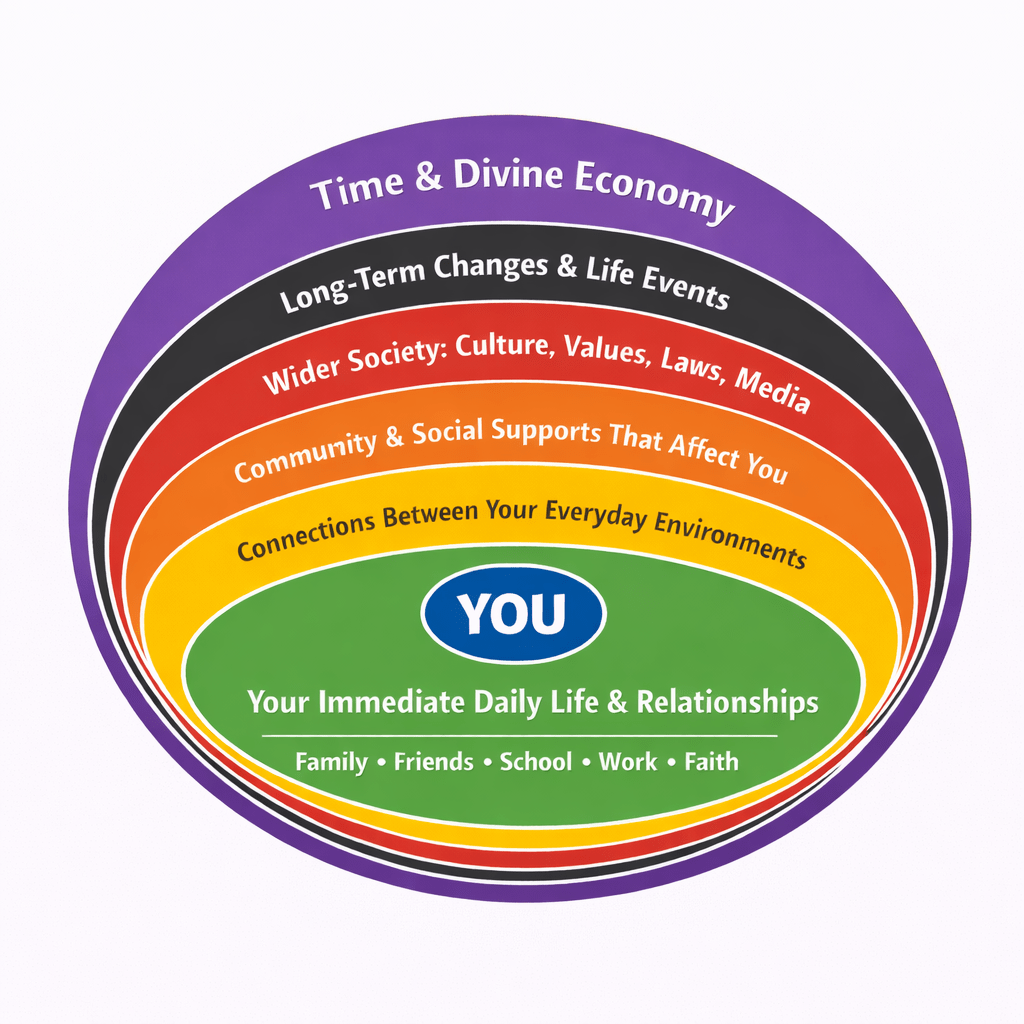
This idea of environments has been called an “ecological model” or “ecological system”(e.g. Bronfenbrenner, 2000). My version of the ecological system includes personal faith in the most immediate environment of “you,” for its significant influence on your life alongside things in life like your family, friends, and school or work. I am also adding the most encompassing environment of time and the divine economy. Everything in all of the environments is always and inescapably happening in time, and everything is happening in the action of God over all (and beyond) time, in something called the “divine economy.” It’s correct to think of time and the divine economy as a huge thing, awesome and magnificent — so much bigger than any of us at any level. However, and perhaps more importantly, time and the divine economy is something that we are part of with our family and friends, school and work, and our personal faith, and time and the divine economy is part of and absolutely inseparable from our life, including our family and friends, school and work, and our personal faith.
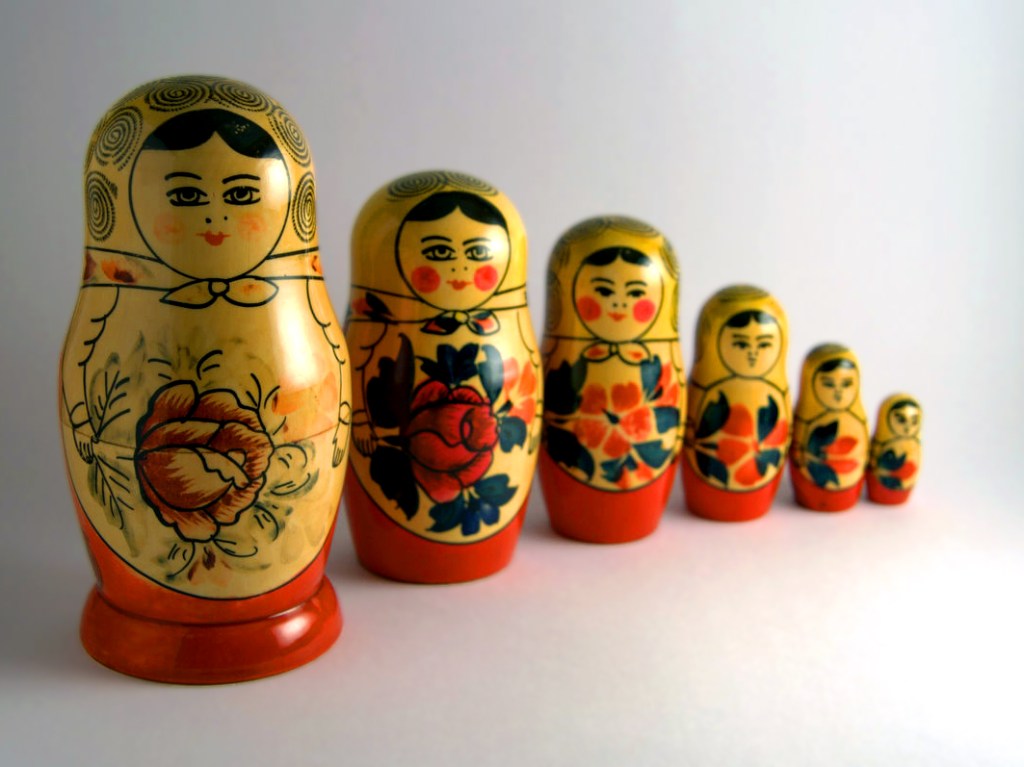
You can also think of all this in terms of a matryoshka doll. The largest doll contains all of the other smaller dolls within itself, including the smallest one. One doll, within a doll, within a doll, and the matryoshka doll consists of all of those dolls within each other. The biggest doll that contains the rest is it’s own thing, but also isn’t separate from the rest when they are all within that biggest doll. They all exist at the same time, within each other, in an interconnected way.
What does all this mean for wellness? It means our wellness is always in interaction with our environments, and it is important to know that if we want better wellness for ourselves. The forces and factors in our environments are many, and we we may be more or less aware of any of them. Each and any of them can influence us in ways that support our wellness, or that impede or deprive us of wellness. To the extent we are not aware of any of these factors or forces, or their effect on us, it is harder for us to seek wellness. For that reason, seeking wellness is about becoming aware of your environments, the things you expose yourself to and participate in every day, and committing to honestly seeing whether any force or factor is supporting your wellness, or impeding your wellness, or even actively depriving you of wellness. Once we know that, we’re smarter to the game, and can start becoming open to change for ourselves.
How does openness to change start?
We can be more open to personal change when we understand where we are starting from and what is involved with personal change. Our Catholic faith teaches us the basic human situation:
- We are all created in the image of God (Genesis 1:27; Catechism of the Catholic Church 355-357; Pope Leo XIV, 2026).
- God calls all of us to relationship with Him (John 17:21-23; Catechism of the Catholic Church 1 & 27; Pope Leo XIV, 2026).
- Our lives include a desire and longing for wellbeing, and that desire and longing is actually desire and longing for God (Psalms 42:1-2 and 63:1; Catechism of the Catholic Church 27)..
- Franciscan Fr. Luke Gregory described the desire and longing as a “universal human desire for renewal and connection with God” (2026).
So basically our human situation is one of convergence. On one hand, we are created in the image of God and are called to God by God, and on the other hand we desire and long for God especially as wellbeing in our own life.
The convergence of our creation in the image of God and call to God by God, with our own desire and longing for God as well-being in our life, results in an invitation to change. Franciscan Fr. Luke Gregory explains that we are invited to (2026):
- Reflect upon our lives
- Contemplate the profound changes that we can make
What is the best way to be open to change?
There are good ways to be open to change, and then there are best ways. If you can do the best ways, why wouldn’t you? In the best ways of being open to change, we respond and build upon the invitation to change in the convergence of our being created in God’s image, being called to God by God, and our own desire and longing for the wellbeing in our life that is God. When we do this we reassess our (Gregory, 2026):
- Values
- What (or who) is worthy or worthwhile?
- What (or who) isn’t worthy or worthwhile?
- What (or who) is most worthy or worthwhile?
- How am I living my values?
- How do I wish I could better live my values?
- What can I do to live my values in the better ways that I wish?
- Priorities
- What is important?
- What isn’t important?
- What is most important?
- How am I living my priorities?
- How do I wish I could better live my priorities?
- What can I do to live my priorities in the better way that I wish?
- Relationship with God:
- How is my relationship with God good?
- How could my relationship with God be better?
- WHat
- How does my relationship with God show up i n my life?
- How do I wish my relationship with God would show up in my life?
- What can I do for my relationship with God to show up in my life in the ways that I wish?
The process of asking and answering these questions for oneself can be very much aided by journaling, i.e. writing down each question and processing your answer through the act of writing, such that your answer is captured in a formal way in your writing writing. Writing helps because whenever you want to, you can always come back to the answers you write and revisit them for purposes of confirming them again or revising them in light of new insights and experiences.
How can the Bible help with questions of values, priorities, and a relationship with God?
Holy Scripture addresses all of the listed questions in a general but no less direct way. In your process of asking yourself the questions and figuring out your answers, you may find a lot of help by looking up things in the Bible or even just spending time reading Goly Scripture on a regular basis.
For example, when it comes to the question of what is worthy, you can check out the opening lines of Ecclesiastes and think about whether a lot of stuff that we think is worthy because of our culture, society, media, or maybe even our families or the way we were raised, actually isn’t that worthy after all. At the same time, key passages of the Gospel may be very helpful, especially as the Gospel is written in a way to share the teachings of Jesus Christ on these questions in a very direct way with you, the reader. For example. you can read and think about Matthew 22:34-40:
And one of them tested him by asking,
“Teacher, which commandment in the law is the greatest?”
He said to him, “You shall love the Lord, your God, with all your heart, with all your soul, and with all your mind.
This is the greatest and the first commandment.
The second is like it: You shall love your neighbor as yourself.
The whole law and the prophets depend on these two commandments”
There is a practice to deepen both your experience of Holy Scripture and your relationship with God through prayer, called lectio divina. The United States Council of Catholic Bishops has developed excellent step-by-step guidance on the practice of lectio divina, and specifically for the meaning of a call. When you are working on your own response to a call for change in your life, this guidance is of high value for your efforts.
How can the Catechism of the Catholic Church help with questions of values, priorities, and a relationship with God?
In addition to Holy Scripture, the Catechism of the Catholic Church also includes information that a person can use to approach their own questions of values, priorities, and their personal relationship with God. The nice thing about the Catechism is that it has a topical index in alphabetical order in the back of the book (printed and online version) that can help you browse and look up ideas that are part of your questions and answers. For example, just starting with values, the Catechism lists more than a few sections that may help:
Values
family as the place for passing on, 2207
hierarchy of values
and economic activity, 2425
and social institutions, 2244
and society, 1886, 1895, 2236
human and Christian values of
marriage, 1632, 1643, 2363
science, technology, and moral values,
2293
turning away from moral values and
scandal, 2286
Looking up “priorities” in the Catechism doesn’t give you a list immediately, but if you remember that we are talking about priorities in life, and then look up “life” in the Catechism, we get almost a full two pages of suggested information. “Relationship” is another one where we get more suggested information when we look up what’s involved. Looking up “God” and “Man” will give you several pages of suggested information, and that’s just for starters.
All of the information in the Catechism is interconnected. Whatever you look up, there will be connections to other important things in a “that’s because” or a “that’s why” kind of way. You can start with one idea, look up one thing in the Catechism, and just by taking a look at that, you will open up a whole network of pathways for your learning and insights. It is an amazing resource and tool for learning that is a great investment of your time to read and pays back even the smallest investment of time with a mountain of learning.
The Big Question: “Am I willing to change?”
Answering the listed self-assessment questions is going to require no small amount of courage, humility, honesty — and openness to change. Just even beginning to ask oneself any of these questions is taking a first step toward change. If the questions were to go never asked, then other possibilities for life would not become clear, and then there is very little, if any, room or motivation for change. The Gospel narrates how Jesus stated that small, compartmentalized, and stagnant lives are not what God ever intends for us: “I came so that they might have life and have it more abundantly” (John 10:10).
AFter answering the listed self-assessment questions, a person can take a look at where they are now in terms of their values, priorities, and relatiionship to God, and where they wish they were, and answer two bottom-line questions (Gregory, 2026):
- Am I willing to embrace change?
- Am I ready to open my heart to having God (more) in my life?
These questions require no less courage, humility, and honesty than the listed self-assessment questions for values, priorities, and relationship to God These two questions are the summit of the questioning process, and actually represent something of a crossroads. Either you are willing to change, or you are not. Either you are open to having God more fully in your life, or you are not. If the answers are in the affirmative, then the process of fulfillment and transformation can happen for you. However if you conclude that you are not open, and not ready, then that process can’t happen.
How does making a change toward wellness start?
If you’ve worked through the ideas and questions we’ve looked at so far, you have already begun a process of change for yourself. You changed from not taking time to think about how life is going, learning some new ideas that may be helpful in seeing and understanding your life, and asking yourself some important questions about your how your values, priorities, and relationship to God are now, and how you wish them to be.
Change after these initial steps will look different for different people, depending upon how they answered their own questions about their values, priorities, and relationship to God. People will have found different connections to Holy Scripture and the Catechism of the Catholic Church in answering those questions and bringing light into their life situation. With those answers a person will see the part of their life that they want to change most, or that they need to change most, or even what would be easiest to change for the better. Once you know that, you can apply the idea of 8-dimension wellness to figure which parts of your wellness you need to work on. Working on that part part of your wellness, or those parts of your wellness, looks like changing the relationship between your thoughts, feelings and actions, as well as becoming more aware of your environments, their influence upon your wellness, and getting intentional with what you are going to continue including in your environments and amplify, and what you are going to throw out or walk away from.
If I had to summarize the basics of embarking upon change with openness, the list would look like this:
- Consider what you learned about your values, priorities and relationship to God from things you read in Holy Scripture or the Catechism of the Catholic Church and invested your time in thinking about.
- Review your answers to the questions about your values, priorities and relationship to God, and figure out —
- What do you want to change most?
- What do you need to change most?
- What is the easiest change to make? (and then build on)
- Take a look at the 8-dimension model of wellness and figure out which parts of your wellness you need to make changes in so that you can have the values, priorities, and relationship with God that you want in your life.
- In those dimensions of wellness that you need to work on, think very clearly and carefully, honestly and courageously, about the forces and factors in your environments that are impacting your wellness, including your values, priorities and relationship to God.
- Start doing two important things at once in any area of wellness you are working on —
- Changing your thoughts, feelings, and actions, and the relationship between them. (Get professional help if you need it.)
- Changing what you include or amplify in your environments to support the positive change n your welness, get rid of the things that impede your wellness or deprive you of wellness.
- During the entire process and effort, keep a connection with:
- Holy Scripture and the Catechism of the Catholic Church, because they can always be a light unto your path (Psalm 119:105).
- Daily prayer to relate to God your wish for wellness, expressing how you think and feel it’s going, and asking for help with confidence that God wants to give you that help and will. The words you use are not important because God already knows what you need (Matthew 6:8).
- Fellowship with people who at least understand and support your commitment to change, if not join with you in seeking change for themselves as well. Change doesn’t have to be a lonely endeavor and happens better and more easily when you are in good company. No matter what, always remember that God is at your side.
Changing the way you live is a big deal. It is also one of the most important things a person needs to do in order to grow, mature, experience the meaning and purpose of their life, and experience fulfillment of those things. Through this process of change, we redefine our identities in ways that have us step further into our God-given purpose and mission (Gregory, 2026). Franciscan Fr. Luke Gregory compares it to the experience of the apostles: “For all believers seeking purpose today, the story of these fishermen offers a powerful example. They teach us that responding to God’s call may require leaving behind familiar comforts, but it also promises a life filled with meaning and adventure” as we engage in the mission of bringing ourselves and others to Christ.
How to Get Past Doubting Yourself
When we are seeking openness to change, and starting the process of making life changes, it is natural to experience self-doubt. When you make an effort at change, its usually an effort to to do something you haven’t done before, or become something you haven’t been before. Because it’s about “never before” it can happen that there isn’t much reason in your past to believe you can do the thing you haven’t done before, or be the person you haven’t been before. In these situations, you have to recognize that just the fact that you have decided to be open to change, and want to make an effort at change, is evidence that you have been selected, picked out, called upon to make that change — and that’s a source of confidence.
You can think that the only reasons that you are open to change and are starting an effort to change are solely your own and not coming from anywhere else. That said, let’s take another look at the big picture.
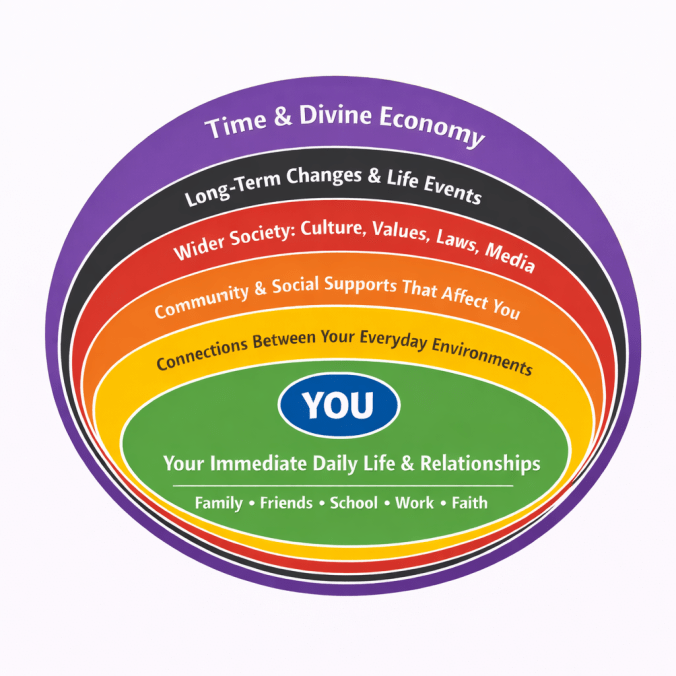
The big picture helps us see that when we get the idea of openness to change and beginning an effort at change, it doesn’t happen outside of time (now) and the divine economy a.k.a. “God at work.” When you embrace that what you are experiencing as “You” and your openness to change and effort at beginning change is God at work, you can avail yourself of a practically unlimited confidence. You may doubt “you,” but it’s a real stretch to doubt even God, and a big mistake to do so anyway — don’t do it! Have confidence!
You may be thinking, “I just don’t get it. I’m just an ordinary person at best.” Franciscan Fr. Luke Gregory explains that the Gospel teaches us: “Jesus does not select the learned or the powerful. Instead, He chooses ordinary individuals.” In fact, God is often seen as having a special focus upon the life situations of the poor and afflicted, and often finds the best teachers, and servants from among those who come from a poverty or affliction of some kind. In that sense, the teacher or servant who knows what it truly is to be poor, or who truly knows what it is to be afflicted, is learned, and is powerful in the sense that they know from experience how to get out of poverty of spirit or spiritual affliction and re ready to do what it takes for themself or someone else. Franciscan Fr. Luke Gregory explains it:
This reassurance is crucial; God can work through anyone, regardless of their past or societal status. It serves as a powerful reminder: we all have a role to play in the Kingdom…The chosen disciples remind us of the transformative potential within each of us, regardless of our backgrounds.
Please share these words with someone who needs them today!
This article is an original work of the author and was not composed by or with artificial intelligence (AI) with the one exception of the ecological systems graphic. The author is solely responsible for the contents of this article and the opinions and perspectives expressed in the article are solely those of the author.. © 2026 Thomas Delaney. All rights reserved.
Top photo: Desert Before the Rain, Dilze Lima, 2019
This article is for educational and spiritual formation purposes only and is not a substitute for professional mental health care. If you need professional help, or are in crisis, call or send a text to 988 to get connected with a professional.
If your parish or faith community is seeking a deeper experience of wellbeing, forgiveness, inner renewal and spiritual growth, Live and Forgive is here to help. To begin the conversation, email Live and Forgive presenter and facilitator Tom Delaney at tom@liveandforgive.com — he will be glad to connect with you for a conversation.
Please type in your email and click “Subscribe” below to stay connected and get Live and Forgive articles delivered to you.
Take your learning deeper! Enter the term or word for any idea or thing you saw in this article that you want to know more about, and you will get a list of other articles that also talk about that idea or thing!
 Live and Forgive