Our Catholic faith recognizes forgiveness as something called a “spiritual work of mercy” — a charitable act by which we come to the aid of our neighbor (Catechism of the Catholic Church, 2447). The United States Council of Catholic Bishops explains, “Just as Jesus attended to the spiritual well-being of those he ministered to, these Spiritual Works of Mercy guide us to ‘help our neighbor in their spiritual needs.'” The spiritual works of mercy are important ways to grow in spirituality and our relationship with God through our relationships with others. Of the seven spiritual works of mercy, no less than three relate directly to forgiveness:
- Bearing wrongs patiently: Placing our hope in God rather than bearing wrongs bitterly.
- Admonishing the sinner: Not judging, but rather supporting and helping others to find their way and correct their mistakes.
- The word “admonish” comes from the Latin word admonere meaning “bring to mind” — think of it that way.
- Forgiving injuries: Forgiving as God forgives, relying on him to help us show others his mercy.
Forgiving others is difficult at times because we do not have God’s limitless mercy and compassion. But Jesus teaches us that we should forgive as God forgives, relying on him to help us show others the mercy of God.
- Let go of grudges
- Saying sorry is something we learn as kids, but how often do we really mean it? Forgiveness transforms hearts and lives
- Participate in the Sacrament of Penance
- Pray the Divine Mercy Chaplet
Two more can be added to the first three spiritual works of mercy if we offer to understand, empathize with, and accompany the wrongdoer in their hard circumstances that lead them to wronging and hurting others, and they too accept that offer:
- Praying for the living (and the dead): Engaging in prayer to support others and entrust them into God’s care.
- Comforting the sorrowful: Listening and comforting those who are dealing with grief in any of its many forms.
The process of forgiveness can not only resolve in our forgiveness of someone, but may also lead to an opportunity for dialogue with that person and the chance to explain our faith to them. This too makes the list as a spiritual work of mercy, and brings us up to a total of seven:
- Instructing the ignorant: Learn about our faith and be open to talking with others about our beliefs.
- Counseling the doubtful: Addressing doubts related to faith in God, God’s love for all, and God’s mercy.
When I look at the list of the seven works of spiritual mercy, I see two things:
First, you can see that the act and process of forgiveness rolls together a lot if not all of the spiritual works of mercy. This is good news because it means that forgiveness is a powerful way to “do” mercy, and it is something that a person can do, no matter how small, ordinary, unimportant, flawed or failed they may see themselves as. As a matter of fact, on the global scale, there are so many of us small, ordinary, unimportant, flawed and failed people that we have the most potential to change the world with our forgiveness. It could even be said that if a merciful and forgiving world is ever to become a reality, it actually depends upon us small, ordinary, unimportant, flawed and failed people. And that is why the small, ordinary, unimportant, flawed and failed people in this world are the most important.
Second, the seven works of spiritual mercy are all ways of carrying out the love of neighbor that Jesus said is linked to the greatest commandment of loving God, and upon which “the whole law and the prophets” depend upon (Matthew 22:36-40). The term “depend” is important, because not only does it imply that just about everything in our faith depends upon the love in these two commandments, but “depend” also points to the fact that the whole of the law and the prophets need our enactment of that love in order to be fulfilled. Saying to someone, “You need to love, the whole of the law and the prophets are depending on you,” sounds intimidating — but it’s true! What it means is that no matter how small, ordinary, unimportant, flawed or failed you may think you or have been told that you are, you are still supremely important, because the whole of the law and the prophets depends upon your love. No matter how stuck in a situation you find yourself in, even the smallest speck of your love is important at a scale that is beyond cosmic. Know that about yourself, take yourself seriously, and make it happen in any and every way, big or small, that you can.
Please share these words with someone who needs them today.
This article is an original work of the author and was not composed by or with artificial intelligence (AI). The author is solely responsible for the contents of this article and the opinions and perspectives expressed in the article are solely those of the author. © 2026 Thomas Delaney. All rights reserved.
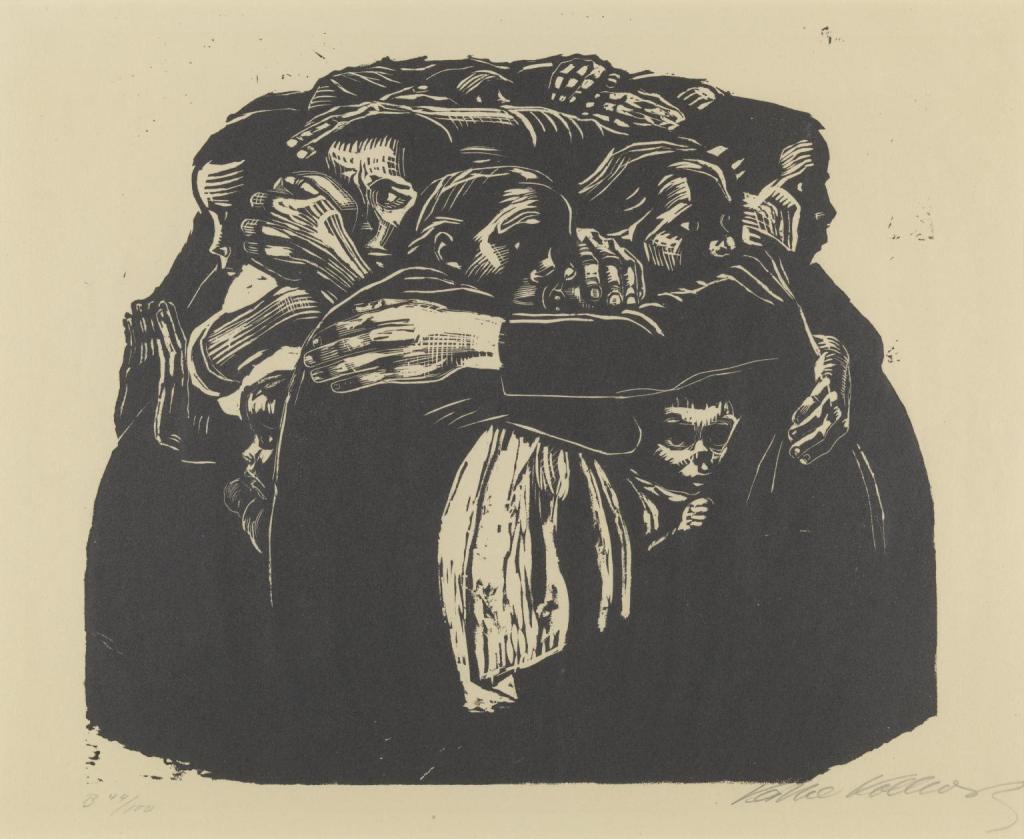
top photo: The Mothers, Kathe Kollwitz, 1922

If your parish or faith community is seeking a deeper experience of forgiveness and wellness for inner renewal and spiritual growth, Live and Forgive is here to help. To begin the conversation, email Live and Forgive presenter and facilitator Tom Delaney at tom@liveandforgive.com — he will be glad to connect with you for a conversation.
Please type in your email and click “Subscribe” below to stay connected and get Live and Forgive articles delivered to you.
Take your learning deeper! Enter the term or word for any idea or thing you saw in this article that you want to know more about, and you will get a list of other articles that also talk about that idea or thing!
 Live and Forgive